


How to Scale Sales in Competitive Digital Platform
The digital economy is expanding at a remarkable pace, and businesses that understand how to position themselves inside a digital marketplace are capturing disproportionate growth. From downloadable templates to premium software scripts, digital goods have become one of the most scalable product categories online. Entrepreneurs, agencies, and developers are increasingly shifting toward marketplace-driven distribution because it reduces friction, expands audience reach, and simplifies fulfillment. However, success depends on strategy, platform positioning, and SEO optimization designed specifically for digital ecosystems.
Why the Digital Marketplace Model Dominates
Digital marketplaces eliminate many of the constraints associated with physical commerce. No inventory storage, no shipping delays, and minimal operational overhead allow creators to focus on value creation. As a result, designers, developers, and educators are building entire businesses around downloadable products such as themes, templates, PHP scripts, and automation tools.
Several factors explain the growth:
- Instant delivery and global accessibility
- Lower operational costs compared to physical products
- High scalability for creators and agencies
- Increasing demand for ready-to-use digital solutions
- Marketplace-driven trust and discovery
These advantages make the digital marketplace attractive for both new sellers and established brands seeking additional revenue streams.

Types of Digital Products That Perform Best
Digital products vary widely, but certain categories consistently perform well across platforms. Businesses targeting these niches often see higher engagement and repeat purchases.
Popular categories include:
- Website templates and UI kits
- WordPress themes and plugins
- Shopify and Wix themes
- Email marketing templates
- PHP scripts and automation tools
- Portfolio and landing page templates
- Digital marketing resources
- Educational downloads and courses
Market research suggests that design assets and developer tools dominate because they solve immediate problems. According to insights from industry research on profitable digital items, sellers focusing on functional, reusable assets tend to outperform purely creative products. External studies such as those discussed in contextual guides about profitable digital goods highlight the importance of solving practical user needs.
Choosing the Right Digital Marketplace Platform
Not all platforms are built equally. Some focus on handcrafted items, while others prioritize scalable digital solutions. Choosing the right platform depends on audience alignment and product type.
When evaluating a digital marketplace platform, consider:
- Audience relevance to your niche
- Commission and fee structure
- SEO visibility within the platform
- Built-in marketing tools
- Licensing and distribution controls
- Download security and DRM support
Platforms designed specifically for digital downloads often include automated licensing, version updates, and analytics, making them more suitable for developers and designers.
For businesses that want to maintain ownership of their brand, building a proprietary store connected to a marketplace strategy is also effective. Many creators combine marketplace exposure with independent storefronts to diversify traffic sources. Exploring curated collections in the shop section can demonstrate how multiple digital categories coexist in a structured environment.

SEO Strategy for Digital Marketplace Success
Search visibility remains one of the most powerful drivers of marketplace traffic. Without SEO, even high-quality digital products can remain undiscovered. Marketplace SEO differs from traditional eCommerce optimization because it requires optimizing both product listings and category structures.
Key SEO priorities include:
- Keyword-focused product titles
- Optimized product descriptions
- Structured categories and tags
- Internal linking between products
- Schema markup for digital downloads
- High-quality preview images
- Fast loading product pages
Experts analyzing marketplace optimization emphasize structured content hierarchy and contextual linking as essential for growth. Research-based strategies discussed in professional marketplace SEO guides show that category-level optimization often drives more traffic than individual listings.
Building Trust and Conversion Signals
Trust plays a crucial role in digital transactions. Buyers cannot physically inspect products, so they rely on credibility signals. Strong trust elements significantly improve conversions.
Important trust factors include:
- Clear product previews and demos
- Transparent licensing information
- Refund and support policies
- Customer reviews and ratings
- Secure checkout experience
Providing access to policy information improves transparency. Users often check details like privacy commitments, refund rules, and terms before purchasing. Linking to relevant documentation such as privacy guidelines or refund information strengthens buyer confidence and reduces hesitation.
Digital Marketplace Pricing Models
Pricing digital goods requires balancing perceived value with competitive positioning. Unlike physical products, marginal cost per unit is near zero, which allows flexible pricing strategies.
Common pricing approaches:
- One-time purchase pricing
- Tiered licensing options
- Subscription access bundles
- Freemium with premium upgrades
- Limited-time promotional pricing
Testing different pricing structures often reveals optimal conversion points. Sellers frequently bundle related templates or scripts to increase average order value.
Content Marketing Within a Digital Marketplace
Content marketing drives organic discovery and establishes authority. Blogs, tutorials, and product guides help attract users who are actively searching for solutions.
Effective content strategies include:
- Tutorial-based articles showing product usage
- Case studies demonstrating real results
- Comparison guides between tools
- Industry trend analysis
- Resource roundups for specific niches
Publishing educational content through a structured blog environment supports long-term visibility and builds brand recognition within the digital marketplace ecosystem.

Leveraging Internal Navigation for Engagement
Internal linking improves both SEO and user navigation. It also increases session duration and product exposure.
Examples of effective internal linking:
- Linking product pages to related templates
- Connecting blog tutorials to downloads
- Directing users to portfolio examples
- Highlighting curated collections
Navigation paths such as browsing product portfolios or accessing support resources help users explore more offerings, increasing the likelihood of conversion.
Marketing Channels That Drive Marketplace Sales
Successful digital sellers rarely rely on a single traffic source. Instead, they diversify acquisition channels.
Top-performing channels include:
- Organic search traffic
- Social media discovery
- Email marketing campaigns
- Affiliate partnerships
- Paid advertising campaigns
- Marketplace internal promotions
Email marketing remains particularly effective because digital buyers often purchase repeatedly. Offering updates, product releases, and exclusive bundles can increase retention.
Product Presentation Best Practices
Presentation directly affects perceived value. Digital buyers evaluate products quickly, so clarity and professionalism matter.
High-performing listings typically include:
- Clean, high-resolution preview images
- Detailed feature breakdowns
- Compatibility information
- Usage instructions
- Update history
Screenshots demonstrating real-world use improve confidence. Listings that show templates applied to real projects often outperform generic mockups.
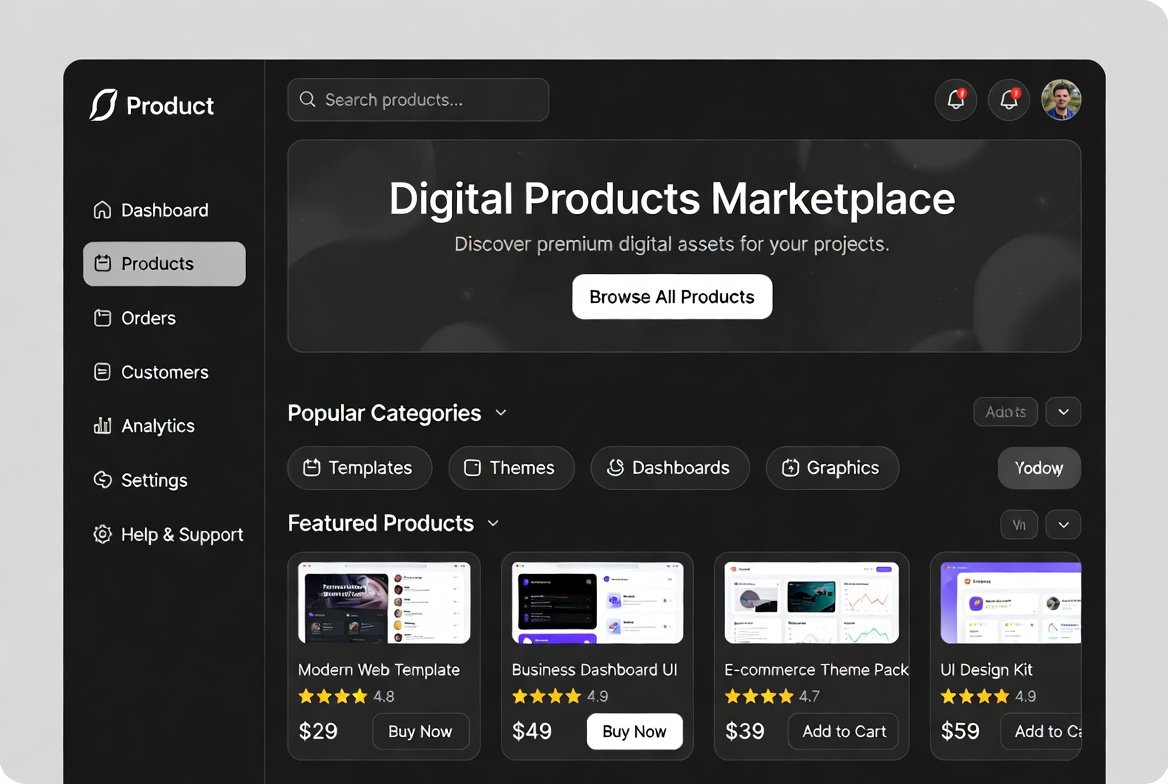
Scaling a Digital Marketplace Business
Once initial traction is achieved, scaling becomes the priority. Growth strategies focus on expanding product lines and optimizing operations.
Scaling strategies:
- Expanding into related niches
- Creating bundled product collections
- Offering premium upgrades
- Launching subscription access models
- Building partnerships with creators
Automation tools also help manage updates, customer access, and download delivery efficiently.
Risks and Challenges
Despite strong potential, the digital marketplace environment includes challenges.
Common risks include:
- High competition in popular niches
- Pricing pressure from low-cost sellers
- Platform policy changes
- Intellectual property concerns
- Market saturation in certain categories
Mitigation strategies involve building a unique brand identity, focusing on quality, and diversifying distribution channels.
Future Trends in Digital Marketplaces
The digital marketplace landscape continues evolving. Several trends are shaping the next phase of growth:
- AI-assisted design tools increasing product creation speed
- Subscription-based access replacing one-time purchases
- Bundled marketplace ecosystems
- Integrated analytics for sellers
- Cross-platform licensing models
Businesses adapting to these trends early will likely maintain competitive advantages.
Strategic Takeaways for Long-Term Growth
Succeeding in a digital marketplace requires more than uploading products. It demands structured SEO, trust-building elements, and continuous optimization. Sellers who combine high-quality digital assets with strong discoverability strategies consistently outperform competitors. Leveraging content marketing, internal navigation, and diversified traffic channels further strengthens long-term sustainability. As digital consumption continues rising, marketplaces will remain central to online commerce, offering scalable opportunities for creators and businesses willing to invest in strategy and quality.